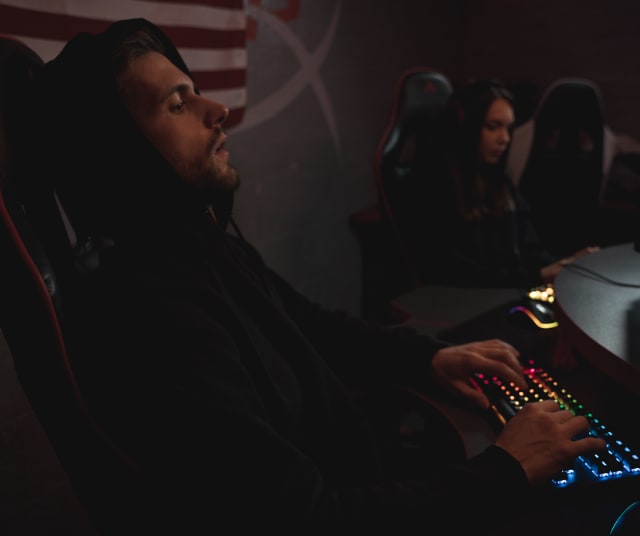
Schools, colleges and universities use esports in three main ways: as an accredited qualification with coursework in coaching, event production, broadcasting and esports business; as a competitive co-curricular activity with school leagues, varsity teams and scholarships; and as a hook for game-based learning that borrows game mechanics to teach other subjects. Adoption has moved from one-off pilots to accredited programmes over the past decade, led by the United Kingdom and North America. The learning evidence is promising but conditional. Engagement and motivation tend to rise, and the gains hold only when teaching is designed around the activity rather than bolted on.
How is esports showing up in schools and colleges?
The clearest example is a timetabled course. Pearson and the British Esports Association launched the Esports BTEC in April 2020 as the first sector-specific qualification of its kind (British Esports). By 2024, the Level 2 and Level 3 BTECs had been delivered in more than 160 schools and colleges to nearly 10,000 students worldwide, including centres in several countries beyond the UK (Pearson and British Esports Federation, 2024). The syllabus covers business, events management, broadcasting, coaching and health and wellbeing rather than time spent playing (British Esports).
Which qualifications and degrees can students actually take?
At Level 3, the BTEC ranges from an Extended Certificate worth one A level to an Extended Diploma worth three (British Esports). In 2024, Pearson and British Esports added a Level 4 Higher National Certificate and a Level 5 Higher National Diploma, described as the first internationally recognised Higher National BTECs in esports, with UK delivery from September 2024 and international centres already teaching them (Pearson and British Esports Federation, 2024).
Universities followed. Staffordshire University opened the United Kingdom’s first esports degree, a three-year BA (Hons) Esports, to its first students in September 2018 (British Esports). In North America the competitive route is larger. The National Association of Collegiate Esports, founded in 2016, grew from 42 member colleges in spring 2018 to more than 200 across the United States and Canada by late 2022 (National Association of Collegiate Esports), with member institutions fielding varsity teams and offering scholarships.
What does the evidence say about engagement and skills?
The strongest independent signal comes from the OECD. Its 2024 report Students, digital devices and success, based on PISA 2022 data, found that 15-year-olds who use digital devices moderately for learning tend to perform better and report a stronger sense of belonging at school (OECD, 2024). A systematic review of 90 gamification interventions published between 2013 and 2023 reached a similarly cautious conclusion: gamification lifts motivation and participation, while its effect on academic achievement stays mixed (Frontiers in Education, 2024). BTEC students themselves report gains in teamwork, communication and problem-solving, though those accounts are self-reported (British Esports).
Does the technology alone guarantee learning?
No, and the same OECD data set is blunt about it. The 2024 report found that students distracted by peers using devices in maths class scored significantly lower, a gap equivalent to about three-quarters of a year of schooling, and that 30.4% of 15-year-olds across OECD countries did not agree their teachers had the skills to use digital devices in class (OECD, 2024). The longer view is more sobering. The OECD’s 2015 study Students, Computers and Learning found no appreciable improvement in reading, mathematics or science in countries that had invested heavily in classroom technology (OECD, 2015).
The practical lesson for esports in education is narrow. Enrolment counts, a headset budget or a full league table measure reach, not learning. The programmes that hold up combine the appeal of games with assessed coursework, teachers trained to use it, and named skills students can carry into work or further study.
Sources
- British Esports: The Esports BTEC one year on
- Pearson and British Esports Federation launch first internationally recognised Higher National BTEC qualifications in Esports (2024)
- British Esports: Staffordshire University introduces esports degree
- National Association of Collegiate Esports (NACE)
- OECD (2024), Students, digital devices and success
- OECD (2015), Students, Computers and Learning: Making the Connection
- Frontiers in Education (2024), Impact of gamification on school engagement: a systematic review