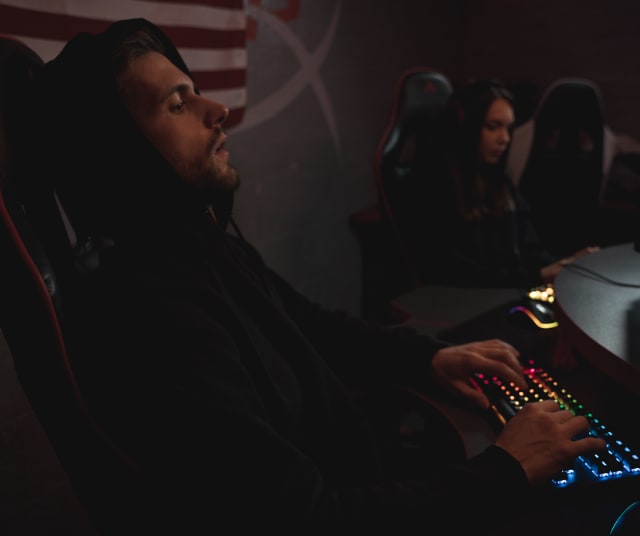
Grassroots esports is competitive gaming organised at the community level: school and college clubs, local and national leagues, and the federations that connect them. It matters because it turns casual play into a structured activity with coaches, a fixture calendar, and a route that runs from a lunchtime club to national and international competition. A one-off tournament crowns a winner. An ecosystem keeps students playing, learning and progressing across years, and that is the harder thing to build.
What counts as grassroots esports, and what does not?
The building blocks are clubs, leagues and federations. A club is a group that meets regularly at a school, college or community centre. A league gives those clubs a season, a ranking table and playoffs. A federation sets rules, trains coaches and keeps records so results mean the same thing from one year to the next. A single tournament can be exciting and still leave nothing behind once the prize is handed out. The leagues and federations below are worth attention because they persist, and persistence is what separates a scene from an event.
How widespread are school esports clubs?
In the United States, the scholastic esports federation NASEF counted about 3,500 high school esports clubs across all 50 states in 2024, having started in 2017 as a regional pilot in Orange County, California. Its reach now extends beyond North America, with individual members in 70 countries and clubs in 30 of them.
Community leagues add more scale. The High School Esports League, founded in 2012 and now part of Generation Esports, reported over 2,100 schools and about 60,000 students in 2019 and today describes reaching over 3,500 partnered schools and 140,000 students.
Who runs the school and college leagues?
In the United Kingdom, the British Esports Student Champs has run since 2016 and has featured in excess of 5,000 players and 700 teams across its history, open to secondary schools, further education colleges and alternative provision schools nationwide.
At college level, the National Association of Collegiate Esports shows how fast a federation can grow. Founded in 2016, NACE expanded from 42 member colleges in spring 2018 to more than 200 across the United States and Canada by late 2022, with member institutions fielding varsity teams and offering scholarships.
How does grassroots esports connect internationally?
National federations sit under an international umbrella. The International Esports Federation, founded in 2008 by nine national associations and based in Busan, South Korea, had 152 member states as of July 2026. That structure gives a national champion somewhere to go next, which is what a pathway means in practice.
Smaller countries are part of this too. Estonia has its own national body, Eesti Arvutispordi Liit, registered as a non-profit association in Tallinn in November 2020. A federation on paper is a start, not a finished ecosystem, and the work of filling it with active clubs is where most of the effort goes.
Why is a pathway better than a one-off event?
Reach is easy to count and easy to overstate. A club roster, a headset budget or a full league table measures how many students turned up, not what they gained or whether they will return. The programmes that last combine three things a single tournament cannot: clubs that meet every week, a competition ladder that carries a student from a school team toward regional and national play, and adults trained to coach and safeguard. Figures like NASEF’s 3,500 clubs or NACE’s 200-plus colleges matter because they describe recurring structures rather than attendance at one weekend. For a grassroots organisation, the useful question is never how big the final was. It is whether a twelve-year-old who joins a club this term still has somewhere to play, and someone to learn from, three years on.
Sources
- Government Technology: Scholastic Esports Surging in Popularity Nationwide, Globally (NASEF figures)
- District Administration: High School Esports League joins forces with charitable foundation (2019 HSEL figures)
- ESTV: HSEL - High School Esports League (current schools and students)
- British Esports Student Champs
- Wikipedia: National Association of Collegiate Esports (NACE)
- Wikipedia: International Esports Federation (IESF)
- Estonian business register (Inforegister): EESTI ARVUTISPORDI LIIT MTÜ