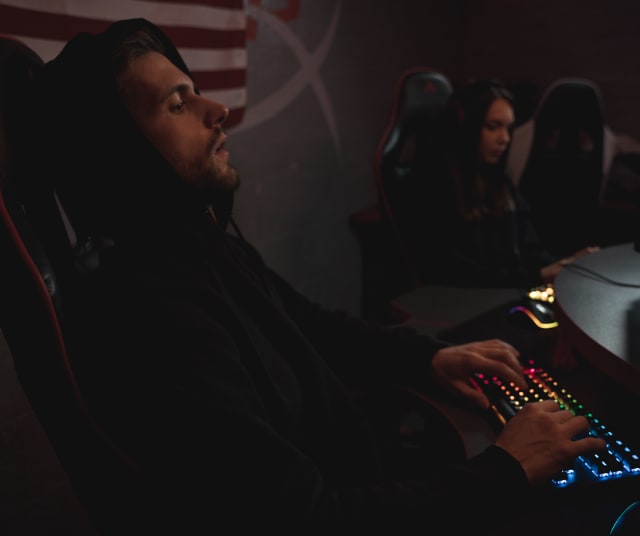
Toxic chat gets treated as weather. It is just there, the thinking goes, an unpleasant condition of playing online that everyone learns to ignore. That shrug is the problem. The players absorbing slurs and targeted abuse in voice and text are often children, and the harm does not evaporate because adults have decided it is normal. Hate speech in games belongs in the youth-safety conversation, alongside scams and unsafe contact, rather than in the pile marked too hard to fix.
The scale is not marginal
Hate in online games is common enough to shape the experience of playing. ADL’s research has repeatedly shown that hate and harassment are widespread in online multiplayer games, and ADL notes that tens of millions of US online multiplayer gamers have been exposed to hate and harassment.
Two things follow from that. First, this is not a handful of bad actors on the fringes; it is a feature of the mainstream spaces where young people spend hours each week. Second, children are squarely in the blast radius. Across OECD countries, 83% of 15-year-olds report playing video games, so the exposure ADL describes reaches a large share of a generation. When abuse is that widespread and the audience is that young, calling it background noise is a choice to look away.
Repeated exposure shapes behaviour
The damage from hate speech is not only the sting of a single message. It is what steady exposure teaches.
- Targeted players can withdraw from games they enjoy, or from voice chat, to avoid the abuse.
- Bystanders learn that cruelty carries no cost, which lowers the bar for the whole community.
- Some children absorb the language and repeat it, passing the behaviour along.
- The line between a heated match and genuine harassment blurs, until real harm reads as ordinary.
The OECD’s 2025 report From Playgrounds to Platforms identifies cyberbullying, misinformation, privacy concerns and digital safety as policy priorities for children’s digital lives, and hate speech in games sits inside that same category of online harm. A child who is told to log off and toughen up learns that the adults around them do not count this as real. That lesson does more lasting damage than any single slur.
Culture change beats moderation alone
Reporting tools and automated filters matter, and they will never be enough on their own. Moderation reacts after the harm, and much abuse slips through voice chat and fast-moving lobbies where a filter cannot follow. The deeper fix is cultural, which makes it slower and more durable.
Community standards only work when players understand and share them, which is a matter of education rather than enforcement. Young players can learn what to do when abuse appears: how to report it, how to support a target, how to refuse to pass the behaviour on. Parents and teachers can reinforce the same standards away from the screen, so a child hears one consistent message rather than a game rule that contradicts what adults say. Ambassador programmes and creator-led campaigns can model a different norm from inside the culture, where standing against hate reads as strength rather than weakness. Platforms, schools and public campaigns each carry part of this, and it works best when the message comes in the language of gaming rather than the language of a policy document.
Treating hate speech in games as an unavoidable cost of playing online has quietly failed a generation of young players. The scale is documented, the harm is real, and the response cannot stop at a report button. Naming hate speech as a youth-safety issue is the first honest step. Building the culture, the education and the campaigns that answer it is the work that follows.